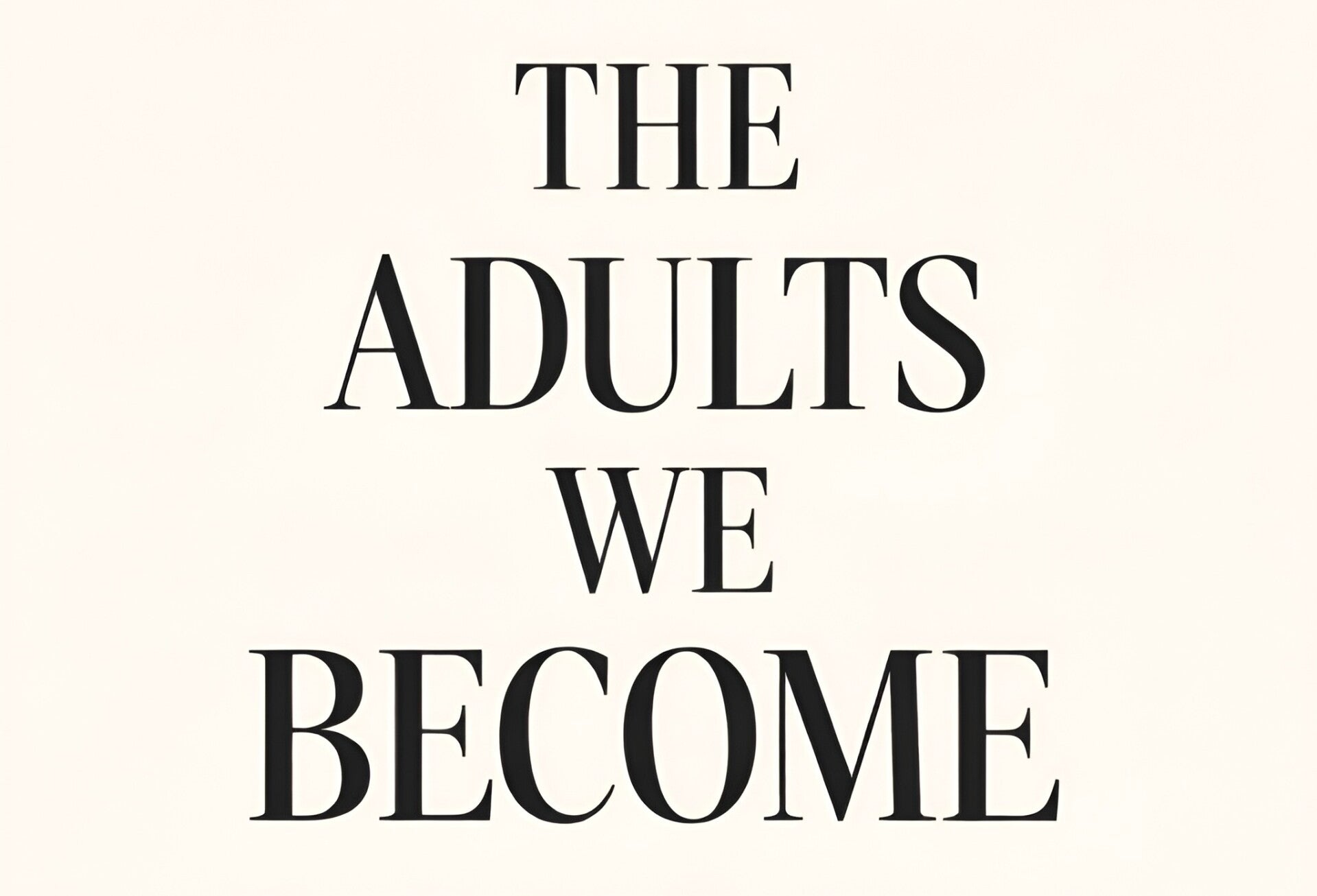
The Adults We Become
Are you an adult who learned early that your worth was tied to how well you functioned? Perhaps excellence was how you stayed safe, loved, or unburdened others. If your competence, intelligence, morality, or self-control became your protection and eventually, your prison, then this is for you. 'The Adults We Become' offers recognition, not instruction. Understand how your childhood adaptations evolved into adult identities that look successful but quietly erode peace, intimacy, and rest. See that your patterns make sense, without shame.
What I'm Writing About
The Adults We Become examines the excellent adult and how they learn to stabilise their worth through brilliance and performance, and how this way of living slowly becomes compulsory. It shows how a life can be admired, trusted, and relied upon, while being internally governed by hyper-vigilance. The book does not resolve this tension. It names it precisely, and leaves the reader inside the recognition.

From Adaptation to Identity
Nifemi's forthcoming book names a system of adulthood in which worth is secured through functioning. Excellence is not an aspiration but a requirement. Within this system, peace is not resisted because it is undesirable, but because it offers no evidence of real value.

Engage in conversations
Nifemi Olumide invites you to engage in conversations – through the book, and beyond it. You can invite Nifemi to speak at events, conferences, organisations, faith spaces, universities, and leadership forums. You can also reach out for facilitated conversations, talks, or reflective sessions around the themes of the book, and stay connected to the book’s journey toward publication. If you leave this page feeling recognised, then deeper dialogue is the next step. The book opens the conversation; speaking brings it into rooms where people are already living these patterns.
"Nifemi has a profound understanding of the human condition. Her insights are penetrating, and her approach is both intellectually rigorous and deeply compassionate."
- Dr. Olivia Rodriguez, clinical psychologist